Term I: April to September
Academics
ACADEMICS & OVERVIEW
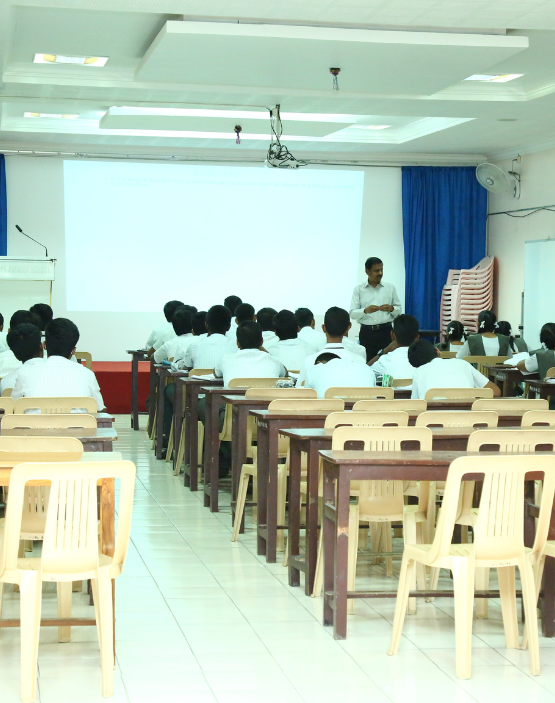
The academic framework of St. Patrick School is designed to nurture intellectual growth, critical thinking, creativity, and lifelong learning. The school follows a structured and progressive academic system aligned with CBSE guidelines, ensuring that students receive a balanced education that integrates knowledge, skills, values, and real-life application. Academic practices are continuously refined to meet national educational standards while supporting the individual learning needs of every student.
Academic Overview
CBSE Curriculum Overview: St. Patrick School follows the curriculum prescribed by the Central Board of Secondary Education (CBSE), one of the most recognized and progressive educational boards in India. The CBSE curriculum emphasizes conceptual clarity, analytical thinking, problem-solving skills, and application-based learning rather than rote memorization.
The curriculum is designed in accordance with the National Education Policy (NEP) guidelines, encouraging multidisciplinary learning, skill development, digital literacy, environmental awareness, and value-based education. Students are exposed to academic experiences that promote intellectual curiosity and prepare them for higher education and competitive environments at national and global levels.
Academic Session Structure: The academic year at St. Patrick School begins in April and concludes in March of the following year. The academic calendar is carefully structured to ensure systematic coverage of the syllabus, regular assessments, and adequate time for revision and enrichment activities. The academic session includes classroom instruction, periodic assessments, co-curricular integration, project work, and experiential learning activities that contribute to the overall academic development of students.
Term System: The academic year is divided into two terms:
-
-
Term II: October to March
Each term consists of structured teaching schedules, periodic assessments, enrichment activities, and term-end examinations. The term system allows continuous monitoring of student progress and provides opportunities for timely academic support and improvement.
Framework
Curriculum Framework
The curriculum at St. Patrick School is designed to address the developmental needs of students at every stage of learning.
The school adopts competency-based learning practices as recommended by CBSE, where the focus is on understanding concepts and applying knowledge in real-life situations. Students are encouraged to analyze, interpret, and solve problems rather than rely solely on memorization.
Experiential learning forms an integral part of the curriculum. Art-integrated learning, sports-integrated learning, and interdisciplinary projects further strengthen experiential education and promote creativity and innovation among students.
- Kindergarten (KG): Focus on foundational literacy, numeracy, communication skills, creativity, and social development through play-based and activity-oriented learning.
- Primary Level (Classes I–V): Emphasis on conceptual clarity, language development, basic scientific understanding, and skill-based learning.
- Middle School (Classes VI–VIII): Strengthening subject knowledge, analytical thinking, and independent learning habits.
- Secondary Level (Classes IX–X): Structured academic preparation with increased focus on competency-based learning and board examination readiness.
- Senior Secondary Level (Classes XI–XII): Stream-focused academic specialization preparing students for higher education and professional pathways.
The school adopts competency-based learning practices as recommended by CBSE, where the focus is on understanding concepts and applying knowledge in real-life situations. Students are encouraged to analyze, interpret, and solve problems rather than rely solely on memorization.
Competency-based education promotes critical thinking, collaboration, communication skills, and independent learning, enabling students to become confident learners capable of adapting to evolving academic and professional environments.
Competency-based education promotes critical thinking, collaboration, communication skills, and independent learning, enabling students to become confident learners capable of adapting to evolving academic and professional environments.
Experiential learning forms an integral part of the curriculum. Students learn through hands-on activities, projects, experiments, discussions, and collaborative learning experiences. This approach enhances understanding, improves retention, and connects classroom learning with practical application.
Art-integrated learning, sports-integrated learning, and interdisciplinary projects further strengthen experiential education and promote creativity and innovation among students.
Art-integrated learning, sports-integrated learning, and interdisciplinary projects further strengthen experiential education and promote creativity and innovation among students.
Instructional
Instructional Programme
The instructional programme at St. Patrick School combines traditional teaching excellence with modern pedagogical practices. Teachers adopt student-centered teaching strategies that encourage inquiry, participation, and conceptual understanding.
Teaching Methodology
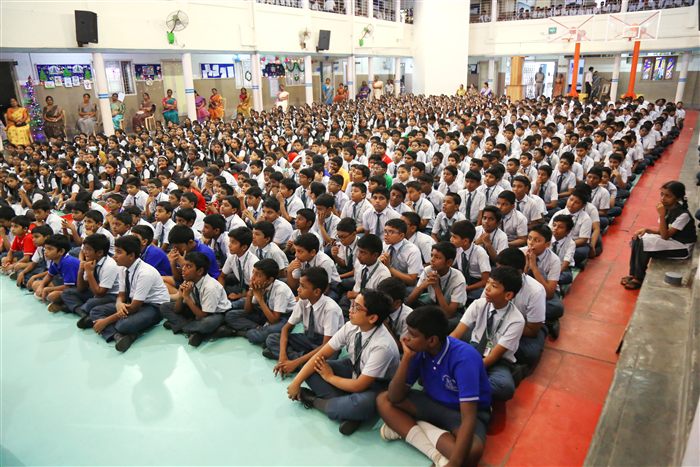
Interactive classroom sessions, concept-based teaching, guided discussions, and collaborative learning. The objective is to create an engaging learning environment where students actively participate in their educational journey.

ICT Integration
Technology is effectively integrated into the teaching-learning process. Digital tools, multimedia resources, and ICT-enabled teaching methods support visual learning, interactive engagement, and improved comprehension.

Activity-Based Learning
Through projects, demonstrations, experiments, group activities, and subject enrichment tasks, students gain practical exposure resulting in creativity, teamwork, communication, and deeper understanding.
Assessment
Assessment & Evaluation
The school follows a comprehensive assessment system that includes both formative and summative evaluations to ensure continuous learning and reduced examination stress.
Formative & Summative Assessment
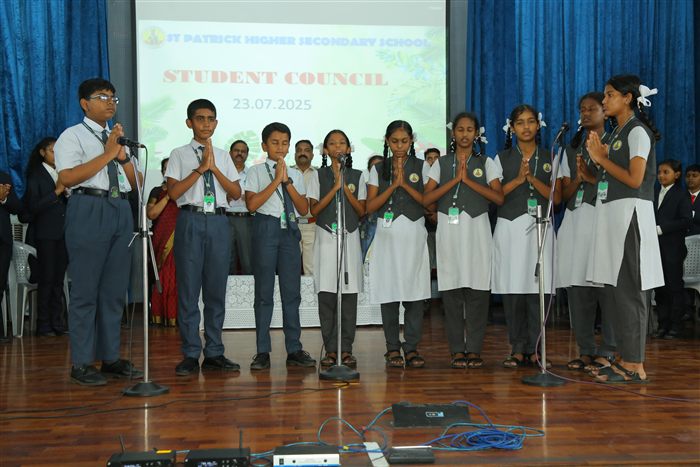
Formative: Conducted throughout the academic year through class activities, assignments, quizzes, projects, and observations to monitor continuous progress.
Summative: Conducted at the end of each term to evaluate overall academic achievement and subject mastery.
Class-wise Assessment Pattern
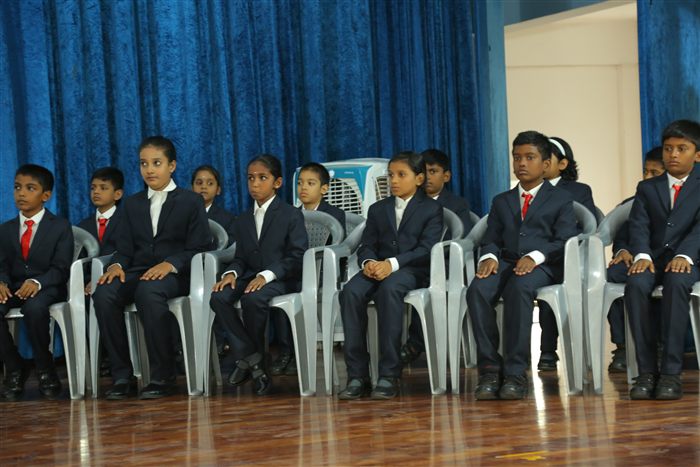
KG: Oral/written/performance.
I–V: Written examinations + skill-based and activity-based evaluation.
VI–VIII: Periodic tests, multiple assessments, portfolio.
IX–XII: Competency-based assessments including objective/analytical per CBSE norms.
Portfolio & Subject Enrichment
Student portfolios are maintained to track academic growth, creativity, and skill development over time.
Subject enrichment activities such as projects, practical work, presentations, and interdisciplinary assignments enhance understanding beyond textbooks and promote independent learning.
Examinations
Examination System
The examination system is carefully structured to evaluate conceptual understanding, monitor progress, and prepare students for both school-level and national-level board examinations.
Special academic support and structured revision schedules are provided for students appearing for CBSE Board Examinations in Classes X and XII.
The preparation programme includes revision tests, mock examinations, doubt-clearing sessions, and focused mentoring to strengthen subject understanding and examination confidence.
Periodic assessments are conducted at regular intervals to evaluate students’ understanding of the syllabus covered. These assessments help teachers identify learning gaps and provide timely academic support to students requiring improvement.
Regular assessments also help students develop examination readiness and confidence.
Regular assessments also help students develop examination readiness and confidence.
Term-end examinations are conducted at the end of each academic term to assess overall performance and conceptual understanding. The examination pattern follows CBSE guidelines and evaluates students through a combination of objective, short-answer, and analytical questions.
Special academic support and structured revision schedules are provided for students appearing for CBSE Board Examinations in Classes X and XII. The preparation programme includes revision tests, mock examinations, doubt-clearing sessions, and focused mentoring to strengthen subject understanding and examination confidence.
The school ensures that students are academically prepared while maintaining emotional balance and confidence during board examination periods.
The school ensures that students are academically prepared while maintaining emotional balance and confidence during board examination periods.